

I didn’t leave teaching. I changed the classroom.
I enjoyed teaching, and I still do. For several years, I taught petroleum engineering, explaining concepts, guiding students through problems, and helping them build confidence in their thinking. Over time, however, a question kept returning: What happens to these ideas once they leave the classroom? How do they hold up in the real world, under real constraints and real consequences? That curiosity eventually led me from academia to industry.
Always one foot in the real industry world
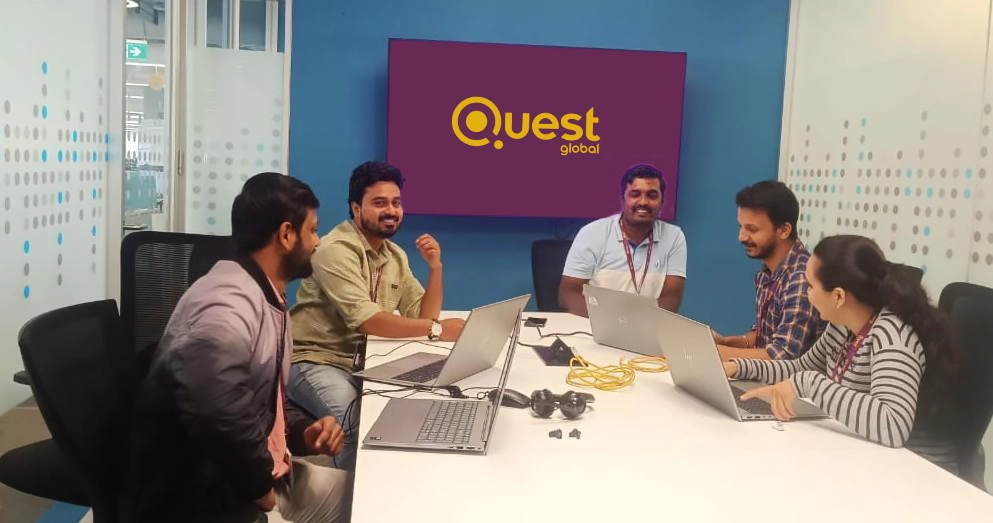
Even while teaching, I was never fully disconnected from Oil & Gas industry. Teaching was just one part of my work. I was also involved in research, consulting, writing papers, and collaborating with professionals in the field. Those conversations mattered to me.
I’ve always believed there’s a gap between academia and industry, especially in India. That gap widens when educators lose touch with what’s happening on the ground. For me, staying connected wasn’t optional; it was essential. So, when the chance came to work more closely with the industry, it didn’t feel like a sudden shift—it felt like a natural continuation.
From teaching students to leading engineers
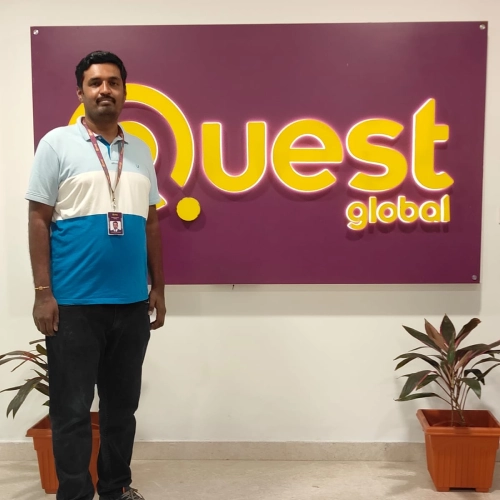
When I joined Quest Global, I stepped into a new role as a Lead Engineer, responsible for a team of around 25 engineers. Some were early in their careers, others more experienced, and all came with different strengths and culture.
Surprisingly, it felt familiar.
Earlier, I had taught classrooms of 60 students who relied on me for knowledge, confidence, and perspective. The setting changed, but the responsibility didn’t.
You begin noticing patterns quickly, where someone needs more confidence, where communication needs strengthening, where fundamentals need reinforcing. I’ve learned that leadership isn’t about pointing out mistakes. It’s about guiding people toward the right support and helping them grow.
I strongly believe that if someone is working for you, it’s your responsibility to take them forward. I practised “leading by example” all my life. People make mistakes. Students, young engineers, and even experienced professionals do. Leadership is about developing your team members, owning outcomes with clients, and inspiring people to do better the next time.
Theory vs practice: a false divide
One question I’m asked often is whether what we study really helps once we start working.
My answer is simple: if your fundamentals are strong, you can tackle almost any situation.
Tools change. Software evolves. Processes get redefined. But core concepts like how systems behave, how to think through a problem, and how to interpret data don’t disappear. Nothing you learn is ever wasted. It may not show up immediately, but it will surface when you least expect it.
In engineering roles like mine, theory and practice aren’t opposites. They build on each other.
Researcher in an industry role
My academic background shaped how I approach problems. In the Oil & Gas industry, it’s common to look for a single, proven solution. Research trains you to look at the same problem in multiple ways, to explore different paths before deciding what works best. Not every approach succeeds, but often one saves time, effort, or cost.
Academia also exposes you to diverse perspectives. You engage with people from different disciplines and backgrounds, and that openness shapes how you approach challenges. Bringing that mindset into Oil & Gas problem-solving is an advantage.
Energy, change, and adaptability
I’ve been hearing that the energy sector is “at a crossroads” since I was a student. Every generation hears some version of that. What has truly changed isn’t the foundation but how we build on it.
AI, automation, and machine learning are reshaping the energy sector, just as they are reshaping many others. Roles are evolving, and engineers who adapt, keep learning and upgrading their skills will remain relevant. Change is the only constant. Adaptability is what matters.
Why Quest Global works for me
Quest Global gives me space to learn, upgrade skills, and think beyond immediate tasks. Structured training programs and a culture that encourages growth rather than confinement make a real difference, especially in an industry that demands both depth and flexibility.
Staying curious
Outside work, I read widely and watch football. Both help me disconnect and think better. Curiosity beyond your immediate role shapes how you solve problems within it. My career hasn’t followed a straight line. It moved from academia to industry, from teaching to leading, from theory to application. What stayed constant was curiosity and the willingness to keep learning. For anyone building a career in engineering today, that may matter more than the path you choose.