


Executive summary

When aerospace engineering leaders tell me they want to implement engineering automation, the conversation invariably begins with artificial intelligence and transformative algorithms that will revolutionize their operations overnight. Through my work with aerospace companies across multiple transformation cycles, I have learned that this initial fixation on AI misses something fundamental about how engineering automation actually delivers value in our industry. The aerospace companies achieving measurable results are not necessarily those deploying the most sophisticated technologies, but rather the ones starting with engineering fundamentals. Automation does not begin with neural networks predicting component failures, though those capabilities have their place as systems mature. Automation begins with engineers who can articulate their processes clearly enough to capture them in structured rules and with engineering teams who identify which repetitive tasks consume hours without adding strategic value.
While discussions around digital transformation often emphasize artificial intelligence and model-based systems, a broader spectrum of engineering automation tools and techniques has been delivering value in aerospace engineering for decades, evolving continuously to meet changing needs. When we help customers implement automation strategies, we deliberately resist leading with the most advanced technology available since that approach frequently produces implementations that deliver minimal value despite significant investment. The problem-first methodology recognizes that AI can be overkill for simple, well-defined problems requiring large datasets for training, extended development timelines, and substantial infrastructure investment that makes return on investment questionable for tasks that simpler automation can solve effectively. The question facing aerospace companies is how to match appropriate automation approaches to specific problems while building digital maturity that supports more sophisticated capabilities over time.
Understanding the automation spectrum beyond AI
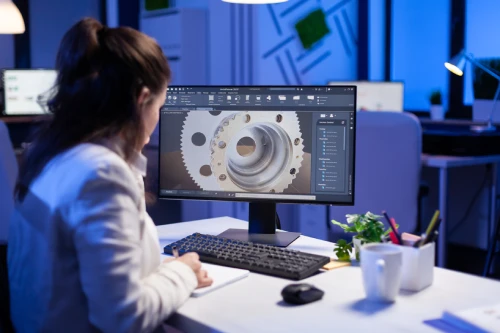
The aerospace and defense industry operates under constraints that distinguish it from nearly every other manufacturing sector, as mission-critical systems cannot tolerate failure, regulatory compliance demands exhaustive documentation and traceability, and development cycles stretch across years or decades. Engineering automation addresses the automation of engineering processes, such as design, analysis, validation, and documentation. Some approaches rely on rule-based logic and scripted workflows, while others use artificial intelligence for pattern recognition and adaptive decision-making, though the most effective strategies match the approach to the specific problem instead of defaulting to the most sophisticated technology available. Most aerospace companies have invested heavily in CAD systems, simulation platforms, and product lifecycle management software. What I see companies struggling with is connecting these systems, eliminating manual handoffs between tools, and capturing engineering knowledge that resides in experienced designers who will eventually retire, taking decades of problem-solving wisdom with them unless firms systematically preserve that expertise. McKinsey reports the cost of talent drain can reach 300 to 330 million dollars for one medium-sized aerospace company, which underscores why knowledge capture through engineering automation matters profoundly.
Knowledge-based engineering captures design rules, standards, and best practices within CAD and PLM platforms so that engineers develop rule-driven templates that automatically generate models, drawings, and documentation based on design intent and established constraints. CAD platforms, like CATIA Knowledgeware and Siemens NX Open API, provide scripting capabilities to implement KBE, encoding engineering expertise into reusable logic so that when parameters change, systems automatically rebuild affected components while maintaining compliance with design standards. CAE platforms have their own scripting languages or automation frameworks, including APDL for ANSYS, Python for Abaqus, and DMAP for NASTRAN, which capture material behavior rules, boundary condition logic, load cases, and parametric variations, and post-processing standards for stress limits and fatigue criteria. Research shows that up to 80 percent of engineering design time is consumed by routine tasks, while KBE reduces this proportion significantly, enabling engineers to focus creative effort where it actually adds value and delivering overall time savings of 20 to 40 percent in product development cycles. Studies demonstrate that KBE applications can reduce recurring design process time by 80 percent for specific tasks, freeing engineers from repetitive work to concentrate on innovation and complex problem-solving.
Artificial intelligence is redefining automation by enabling systems to learn, adapt, and optimize complex processes that were once manual and time-intensive, introducing cognitive capabilities such as pattern recognition and predictive analytics that allow engineers to make faster, data-driven decisions. Generative design algorithms enable the creation of lightweight, high-strength structures by exploring thousands of design possibilities automatically, while computer vision systems deliver precise automation for manufacturing and aftermarket quality inspections. NASA’s use of generative AI to design evolved structures demonstrates how AI pushes automation beyond efficiency into genuine innovation. The global generative AI market in aerospace and defense reached 1.39 billion dollars in 2024 and is expected to grow to 18.73 billion by 2034 at a compound annual growth rate of 29.7 percent, reflecting the technology’s expanding role in design optimization, mission planning, and autonomous systems.
Practical automation tools delivering immediate value
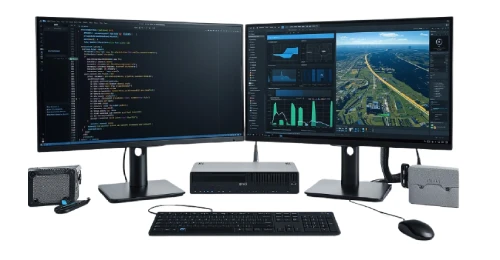
Application programming interfaces (APIs) play a critical role in engineering automation by enabling smooth communication between software systems, which means that design changes in CAD are instantly reflected in PLM for version control while triggering approval workflows and initiating downstream activities such as simulation and manufacturing planning without manual intervention. Building an effective digital thread requires deliberately connecting these systems so that data flows bidirectionally, which means that design intent captured in CAD automatically informs manufacturing processes while operational feedback from fielded aircraft flows back to inform design improvements. APIs act as the backbone of automation because CAD APIs feed design geometry into PLM systems, PLM APIs propagate design changes to manufacturing execution systems and simulation tools, simulation APIs push analysis results back into PLM, IoT APIs bring operational data from aircraft into digital twin platforms, and ERP APIs link cost and procurement data to ensure business decisions align with engineering changes.
Python scripts provide flexibility to integrate easily with CAD, CAE, PLM, and data analysis tools through libraries like NumPy, Pandas, Matplotlib, PyVista, PyANSYS, and Abaqus Scripting Interface, which means engineers can quickly write scripts without deep programming expertise. Despite the rise of advanced tools, Microsoft Office remains the backbone of engineering workflows, with millions of existing business processes relying on Visual Basic for Applications to automate repetitive tasks in Excel, Word, and PowerPoint, though modern alternatives such as Office Scripts and Power Automate are emerging. Microsoft Copilot takes automation further by integrating AI into applications, empowering users to generate formulas, analyze data, create summaries, and automate tasks by describing their intent in natural language versus writing code. Shell scripts automate repetitive tasks in batch mode, batch processing hundreds of simulation jobs overnight, managing files, connecting different tools in pipelines, and scheduling jobs on high-performance computing clusters or cloud environments. Low-code and no-code platforms, like Microsoft Power Apps, Mendix, and OutSystems, are increasingly used in engineering automation to create lightweight applications for engineering teams, bridging gaps between legacy systems and modern digital threads, with Gartner projecting that by 2026 more than 75 percent of new enterprise applications will use low-code or no-code development.
Aerospace and defense programs involve highly complex processes with thousands of documents, design iterations, and rigorous compliance checks that require synchronized, automated workflows ensuring speed, accuracy, and regulatory compliance across globally distributed teams. PLM systems, like Teamcenter, ENOVIA, and Windchill, automate design release approvals, change management, and document routing, while manufacturing engineering workflows handle process planning, tooling validation, and quality checks automatically, and analysis workflows automate job submission, result extraction, and report generation. Decision trees provide a structured way to represent rules and logic for decision-making through visual or algorithmic representation of IF-THEN rules, which in aerospace can show how choices, such as material selection, load conditions, and manufacturing constraints, lead to different design paths or maintenance actions while providing clear logic that is easy to validate and certify compared to black-box models. Robotic process automation uses software bots to automate structured, repetitive tasks, and unlike AI, RPA does not think but follows predefined rules and workflows, remaining non-invasive by working on top of existing systems without major integration changes. The global RPA market in aerospace was valued at approximately 6.5 billion dollars in 2023 and is expected to grow at 24 percent annually, driven by applications across simulation automation, supply chain management, aftermarket support, and certification workflows. Bots in these domains trigger CAE jobs and generate reports, update inventory across ERP systems, process fleet queries from maintenance facilities, and extract design data to populate compliance templates for regulatory submission. RPA can be integrated with AI for decision making and extended automation.
Why problem definition precedes technology choice
Throughout my career working with aerospace and defense companies, I have observed a consistent pattern in which people get carried away with the technology buzz and then search for problems it might solve, which inverts the natural order of problem-solving and frequently leads to implementations delivering minimal value despite significant investment. A problem-first methodology ensures that engineering automation decisions are driven by actual business needs as opposed to trends, which helps in understanding and defining problems thoroughly before jumping to solutions or tools and leads to more effective outcomes. When engaging with customers on automation initiatives, mapping current processes, identifying bottlenecks and failure modes, quantifying the time engineers spend on various activities, and understanding compliance requirements that constrain operations reveals where automation can deliver meaningful impact. AI implementation can be excessive for simple, well-defined tasks when large datasets, extended training cycles, and infrastructure costs often make return on investment questionable, and lightweight automation could achieve the same goal faster and more economically.
Engineering automation succeeds through cross-functional expertise spanning domains, disciplines, and technologies. Polymath engineering delivers this by bringing together domain specialists, engineering experts, and digital innovators. Domain specialists bring deep knowledge of aerospace and defense requirements, ensuring automation aligns with aerospace-specific constraints, like zero-failure tolerance for mission-critical systems, FAA and EASA certification requirements, and the rigorous traceability demanded by defense programs. Engineering experts understand technical details of design, manufacturing, and testing processes, identifying automation opportunities in complex design iterations, manufacturing processes, and testing workflows while validating outputs against strict acceptance criteria. Digital innovators specialize in tools and technologies ranging from generative AI and machine learning to Python scripting and PLM integration, translating aerospace engineering needs into scalable solutions by selecting technologies that can integrate with legacy systems and meet security requirements that defense contracts mandate. This enables right-sized automation that avoids over-engineering and delivers a faster return on investment.
Preserving human judgment in critical systems
The human-in-the-loop engineering automation ensures that people remain central to critical decision processes even as machines handle routine tasks, which is essential in aerospace and defense environments that operate under zero-failure tolerance, where automated tools can accelerate design and manufacturing while human oversight ensures that every decision meets regulatory and safety standards. This approach excels at repetitive, rule-based tasks, but aerospace often involves complex scenarios and exceptions requiring human judgment, especially during certification or anomaly resolution when situations fall outside normal operating parameters. Certification authorities, like the FAA and EASA, mandate human validation for critical processes involving flight control systems, avionics software, and structural integrity checks, while human feedback refines algorithms over time, making them smarter and more reliable through continuous learning.
Through my work observing automation implementations, I can say that concerns about engineers being replaced by systems miss the fundamental purpose. The goal is amplifying human capabilities by removing low-value tasks consuming time without requiring the creative problem-solving and critical thinking that define engineering work. Automation handles data transfers between systems, generates standard reports, and validates designs against established rules, which frees engineers to focus on work that truly requires human expertise. Engineers can then develop innovative solutions to technical challenges, make high-stakes decisions requiring judgment and experience, and design next-generation aircraft and defense systems.
Why automation investments compound over time
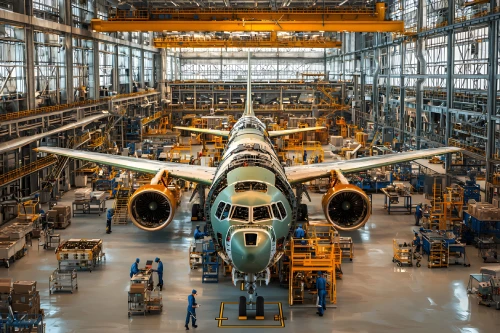
Every aerospace and defense company has begun its engineering automation and digital transformation journey, driven by the recognition that staying competitive requires embracing smarter, faster, and more connected ways of working. Firms delaying automation risk falling behind competitors who capture the efficiency gains, quality improvements, and cost reductions that well-implemented automation delivers. Engineers play a pivotal role in identifying automation opportunities through their daily experience with manual processes that introduce delays, errors that occur repeatedly, and tasks that consume hours without adding strategic value.
Engineering processes that operate more efficiently drive down development costs and compress timelines, allowing companies to bring innovations to market faster. Quality improvements through automated checks prevent errors from propagating through development phases, which reduces rework and accelerates certification processes. Knowledge capture mechanisms preserve expertise as experienced engineers retire, ensuring organizations maintain continuity and avoid repeating mistakes that past generations solved. These benefits compound as engineering automation matures from initial implementations addressing isolated pain points to integrated digital ecosystems connecting design, manufacturing, and sustainment.