


Last month in India, a team of engineers at Quest Global walked me through a problem I could not stop thinking about for days afterward. Hundreds of millions of people living in rural communities across the country have no meaningful access to digital connectivity, even though the underlying technology exists and has for years. The gap is more contextual than it is technical. These are communities where a daily income of less than $2 is common, where the power supply drops out unpredictably, and where many people have never held a touchscreen device. No existing smartphone, however discounted, was designed with any of that in mind.
So, the team did not try to make one cheaper. They asked a different question altogether, one that sits at the heart of what is known as frugal engineering. What does connectivity actually look like when you design it for the life someone is already living?
Working from that question, they built a basic feature phone from the ground up that could run 4G and 5G applications, support video streaming, handle digital payments, and operate in over ten Indian languages, all on minimal memory and processing power. The device was not a stripped-down smartphone. It was a different phone entirely, fit for purpose and designed to perform within the constraints.
Frugal Innovation and the Discipline of Less
Quest Global’s Co-founder and CEO, Ajit Prabhu, often says that given enough resources and time, anyone can succeed. I think about that line frequently because it reframes what innovation actually means. Exceptional engineering does not happen when every resource is available. It happens when meaningful constraints force a team to understand a problem more deeply than they otherwise would have. Frugal innovation is the discipline that grows out of that pressure. It treats limited budgets, unreliable infrastructure, and scarce technical expertise not as obstacles to engineer around but as design parameters that shape what gets built and how.
India’s engineering community has been practicing this discipline for decades, and the instinct it produces is distinctive. When your user base numbers in the millions and many of them cannot afford premium pricing or access reliable maintenance, you learn to refocus design on what genuinely matters and let go of everything else. I have spent most of my career in consumer packaged goods and cereal innovation, where the default impulse is almost always to add. The frugal engineering mindset runs in the opposite direction, asking what can be removed without compromising the outcome, and that question leads to surprisingly elegant results.
There is a concept in innovation thinking called the “job to be done,” the idea that people do not really buy products so much as hire them to accomplish something specific in their lives. A rural farmer in India is not in the market for a smartphone. He wants to video-call his daughter in another state or pay for supplies at the local market without carrying cash. Frugal engineering takes that idea seriously in a way that conventional product development often does not, because the constraints leave no room for features that do not serve the job. Everything extraneous falls away, and what remains is precisely what the user actually needs.
Where Constraints Sharpen Engineering
I have seen this pattern repeated across engineering domains at Quest Global, and each time it strikes me how the constraint advantage compounds. Engineers designing power grids that experience frequent outages end up creating systems with built-in resilience that prove valuable in any market where uptime matters. Product teams building interfaces for users with limited technical training produce products that are more intuitive for experienced users too. The constraints force deeper conversations with the end user, and those conversations surface assumptions about how things work or how they have always been done that a less constrained team might never think to examine.
One Quest Global team spent weeks analyzing user behavior patterns and then eliminated a component from a product design, not because the component was expensive in isolation, but because removing it simplified the entire manufacturing process and made the system more cost-effective at scale.
Frugal Solutions That Travel
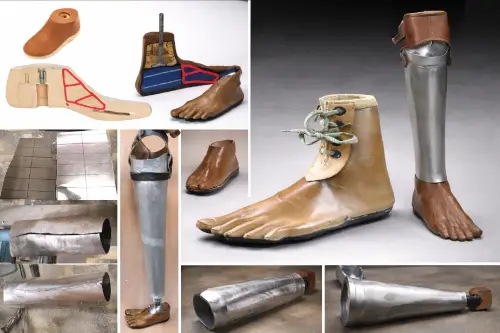
Frugal innovation has deep roots in India, where engineering under constraint is less a conscious methodology and more a fact of life. Scarce resources, vast populations, and enormous geographic and linguistic diversity have shaped how Indian engineers think about problems across generations. And some of the most striking work that has come out of this environment has ended up solving problems far beyond the communities it was originally designed for.
The Jaipur Foot prosthetic[1], developed in 1968 by Dr. P.K. Sethi and craftsman Ram Chandra Sharma, was designed for people who walk barefoot, squat while working, and move through muddy fields, all conditions common in rural India that conventional prosthetics were never built to handle. The design used locally available and inexpensive materials, mostly rubber, wood, and aluminum. TIME magazine later recognized it as one of the greatest inventions[2] of the 20th century.
The Bhagwan Mahaveer Viklang Sahayata Samiti (BMVSS)[3], founded in 1975, has since provided over 1.8 million[4] prosthetic limbs at no charge across 30 countries. During the war in Afghanistan[5], the Jaipur Foot was used to treat land mine victims. A prosthetic designed for Indian farming communities turned out to be exactly what was needed in conflict zones thousands of miles away, because starting from a tightly defined constraint had produced something fundamentally robust and adaptable.
Mansukhbhai Prajapati’s Mitticool clay refrigerator follows the same logic. Developed after the 2001 Gujarat earthquake[6], it can be manufactured for $50 and keeps vegetables fresh for four to five days and milk for up to 48 hours, all without electricity. Over 9,000 units have sold across India, and the design has earned recognition from Cambridge University’s[7] Judge Business School. The engineering relies on nothing more than clay, water, and evaporation, yet it accomplishes the job of keeping food fresh in communities without reliable power with a precision that far more expensive refrigeration technology struggles to match at that price point.
The transferability of these solutions is not accidental. When engineers design for the most demanding constraints, the resulting work tends to carry a kind of built-in universality. A prosthetic that handles barefoot farming in rural Rajasthan can handle rubble in Kabul. A refrigerator that works without electricity in post-earthquake Gujarat works anywhere the grid is unreliable. Frugal innovation, practiced at the scale and intensity that India demands, produces engineering that travels well precisely because it was never designed for easy conditions in the first place.
A Different Starting Point

None of this is an argument against sophisticated technology or well-funded research. Frugal engineering is not the opposite of advanced engineering. It is a different starting point, one where the engineer’s first loyalty is to the problem rather than the spec sheet. When constraints are treated as design inputs rather than problems to work around, the engineering conversation changes. It becomes less about what is technically possible and more about what the person at the other end actually needs, and the solutions that come out of that conversation tend to be more adaptable and more durable than anyone initially expected.
My time at Quest Global has shifted how I think about what good engineering looks like. The best work I have encountered here does not begin with the question of what technology allows. It begins with the people who will live with what gets built, the conditions they face every day, and the specific problem they are trying to solve. Frugal innovation, at its core, is the practice of identifying ‘the job to be done’, embracing constraints, and letting those realities lead the engineering rather than the other way around.
References
- “Jaipur Foot: the low-cost prosthetic that revolutionised medical care in India and beyond.” Science Museum Blog, February 16, 2021.
https://blog.sciencemuseum.org.uk/jaipur-foot-the-low-cost-prosthetic-that-revolutionised-medical-care-in-india-and-beyond/
- “The Jaipur Foot and the ‘Jaipur Prosthesis’.” PMC, National Center for Biotechnology Information.
https://pmc.ncbi.nlm.nih.gov/articles/PMC6394196/
- “The Jaipur Foot and the ‘Jaipur Prosthesis’.” PMC, National Center for Biotechnology Information.
https://www.investforchildren.org/en/projects/collaboration-with-bmvss-jaipur-foot-2024/
- “Jaipur Foot: A Revolution in Prosthetics and a Lifeline for Millions.” Medium, November 18, 2024.
https://medium.com/@indianinnovation/jaipur-foot-a-revolution-in-prosthetics-and-a-lifeline-for-millions-54d662d45f41
- “Collaboration with BMVSS Jaipur Foot 2024.” Invest for Children, November 6, 2024.
https://www.undp.org/india/stories/best-foot-forward
- “MittiCool Clay Refrigerator.” V&A Museum Collection.
https://collections.vam.ac.uk/item/O1331548/mitticool-clay-refrigerator-refrigerator-prajapati-mansukhbhai/
- “A Touch of Frugal Genius.” University of Cambridge, Research Features, October 15, 2015.
https://www.cam.ac.uk/research/features/a-touch-of-frugal-genius