


Learnings from the evolution of the XR ecosystem
XR began its commercial journey around 2013 with early devices like Google Glass, followed by Microsoft’s HoloLens in 2016.
2013–2016 defines the Phase 1, or, if we may call it, the Early Failure phase, where the failure was primarily due to Social Stigma (“Glassholes”), Poor battery life, Thermal comfort, and, of course, privacy backlash with the camera in ‘Always On Always Connected’ mode. Like they say, “Tech Novelty without social acceptance fails”.
2017–2021 marked Phase 2, during which XR adoption shifted decisively toward enterprise and industrial use cases. Devices from players such as Vuzix, RealWear, and HoloLens represented the cutting edge of technology at the time and delivered meaningful value in controlled, task-specific environments.
This phase is called out distinctly as it demonstrated technical viability but limited translation into intuitive, everyday human-centric experiences.
However, this phase also surfaced important learnings. While many of these devices were not physically bulky, they were visibly industrial, enterprise-first in design, and optimized for narrow workflows rather than everyday use. A critical ingredient was still missing: natural voice-based interaction and AI-driven assistance that could reduce cognitive load and make XR intuitive beyond trained users.
The takeaway was not technological immaturity, but misalignment between capability and human-centered usage, particularly for broader adoption outside enterprise settings.
These years provided device and platform leaders the opportunity to reassess not just form factors, but the true role XR should play in daily life. The market inflection point arrived in 2023, when Meta and Ray-Ban re-entered the space with AI glasses, now widely regarded as the most successful reference to date.
The breakthrough was not about adding more technology to the face, but about making technology feel invisible and useful.
With Meta, Xiaomi, XREAL, Huawei, and several emerging players already active, the growing number of participants itself signals the arrival of AR and AI smart glasses as a viable category. Rather than fragmentation, this proliferation reflects ecosystem confidence and accelerating innovation.
One of the primary learnings across earlier XR product generations and adoption phases has been the importance of evaluating devices and applications in real-world contexts, against experience metrics that genuinely matter to users. The challenge has not been a lack of technology maturity, but the difficulty of assessing whether XR experiences truly integrate into daily life in ways that feel intuitive, comfortable, and valuable.
XR glasses succeed or fail on experience, a human-centric one, not on features. Unlike phones or other CE devices;
- There’s no tolerance for discomfort
- Returns are immediate
- Reputation damage is permanent
The learning curve and tolerance are very limited. For example, on mobile, a 5-second delay is just lag, but in smart glasses, it can be grounds for a product return.
Typical XR Ecosystem Blocks
XR is a cyber-physical ecosystem. Multiple system layers must work together smoothly to create experiences that feel natural, trustworthy, and useful. XR requires tighter integration among hardware, software platforms, and experience layers than traditional consumer devices do.
The XR ecosystem has three main layers. This list is not exhaustive, but it covers the most important factors for real-world usability and market success.
|
Device hardware layer |
Platform and systems software layer |
Experience and application layer |
|
|
|
XR is unique because it requires multi-partner collaboration across the ecosystem. To develop XR glasses, Silicon and module providers, ODMs, OEMs, OSVs, network and cloud providers, and app developers must work together.
Verification and validation make the process more challenging. Providers using conventional testing methods for standard consumer devices—like phones, watches, headsets, and Alexa devices—face performance and acceptance issues.
Traditional consumer-device testing does not work for XR. The mismatch is structural, not procedural.
- Isolated component validation: Traditional testing validates components in isolation, but XR failures typically emerge at the system level, manifesting as latency-induced discomfort, visual instability, perceptual mismatch, or degraded trust.
- Static lab success vs dynamic real-world failure: XR hardware may pass lab-based qualification yet fail in real-world conditions due to environmental variability, inconsistent SLAM performance, lighting changes, or UI behavior that does not scale across contexts.
- Evolving product expectations (MVP vs USP): XR devices often launch as Minimum Viable Products, but market expectations quickly shift toward Unique, experience-driven value propositions. This rapid evolution exposes gaps between what was validated during development and what users ultimately expect, creating testing blind spots that conventional approaches are not designed to catch.
- Need for multi-layered validation: Effective XR validation must integrate hardware performance, platform conformance, AI behavior, and human factors. Experience quality depends on how these layers interact, not how each performs independently.
XR needs new validation approaches based on system behavior, real-world use, and human experience measures.
Traditional XR validation has pitfalls. Components may work in independent or ideal validations, but often fail in real-world use. Shift focus from device validation to assuring system-level experiences.
Key Challenges Warranting Deep & Differentiated Testing for Glasses
XR glasses pose challenges beyond traditional consumer electronics. These risks fall into five categories, and each needs system-level, context-aware validation to build user trust and market acceptance.
A. Comfort and physiological acceptance
Challenges:
- Eye fatigue during prolonged usage
- Motion discomfort caused by latency jitter
- Heat buildup near temples, nose bridge, or ears
Requires Validation of:
- Motion-to-photon latency and jitter
- Thermal steady-state behavior during extended sessions
- Long-duration wear studies across varied usage patterns
B. Privacy, data protection, and social trust
XR glasses work in shared spaces, making privacy and trust vital for both the wearer and bystanders. These issues go beyond regulatory rules and affect how people perceive, feel, and accept the device socially.
Challenges:
- Wearer concerns around personal data usage, storage, and unintended surveillance
- Anxiety among bystanders about recording, consent, and visibility of capture
- Social discomfort caused by unclear device intent or behavior
Requires Validation of:
- Perceived privacy and user trust, not just documented policy compliance
- Visibility, clarity, and effectiveness of recording indicators
- Context-aware restrictions (e.g., auto-disable zones such as workplaces or private spaces)
On-device versus cloud processing behavior and data handling transparency
C. “Magic Demo” vs Daily-use reality
XR devices impress in demos but struggle with adoption in daily, repeated use.
Challenges:
- Drop-off in perceived value after initial novelty
- Inconsistent performance across daily scenarios
- Degradation under battery and network stress
Requires Validation of:
- “Day-in-the-life” scenario testing
- AI task success metrics tied to user outcomes, not just model accuracy
- Battery endurance and network variability stress testing
D. Social acceptability and physical design
XR glasses must fit social and cultural norms. People accept them when they integrate naturally into daily life, look appropriate, and feel comfortable.
Challenges:
- Visual conspicuousness and social awkwardness
- Poor fit across diverse face shapes and regions
- Imbalanced weight distribution affects long-term comfort
Requires Validation of:
- Frame fit and ergonomics across populations
- Regional facial geometry and wearing-style variations
- Weight balance and pressure distribution during motion and extended use
E. Ecosystem and interoperability risk
XR relies on platforms, apps, accessories, and updates working together. Fragmentation erodes user confidence quickly.
Challenges:
- Applications work on some devices but fail on others
- Breakages introduced through platform or OS updates
- Inconsistent behavior across connected devices and accessories
Requires Validation of:
- OpenXR and platform conformance
- Cross-device and cross-version regression testing
- Android XR platform parity and compatibility checks
Why system-level validation is critical
While component-level testing remains necessary, it is insufficient on its own. Traditional validation pitfalls in the context of XR. While components might work beautifully in independent validation and even together in controlled scenarios, they might not work as well in real-life conditions. So a shift is required – from device validation to system-level experience assurance.
XR risks typically emerge from interactions across silicon, optics, operating systems, AI responsiveness, and user experience. Treating XR as a whole system, rather than a collection of parts, is essential to reduce fragmentation and prevent late-stage failures.
Given the early stage of market adoption, user trust and first impressions carry disproportionate weight. Late discovery of comfort, performance, or trust issues can lead to costly delays, reputational damage, and stalled adoption. This risk is amplified by the wide variation in human comfort thresholds, where even small latency or stability issues can affect not just experience quality but also physical well-being.
Quest Global’s take on Testing Framework & Approach
To begin, it is important to define what components and dimensions are essential for thorough testing.
At QG, we view XR V&V not as a back-end function but as essential for product launch decisions, privacy and trust, and risk mitigation. Our framework spans silicon, hardware, platforms, AI, networks, and human factors, and is tested in both real-world and lab environments.
XR glasses demand validation across hardware, platform, AI, and experience layers, with testing evolving alongside the product lifecycle, from early prototypes through production readiness. While these dimensions are tightly coupled, each requires focused validation to ensure overall system reliability and market acceptance.
Hardware and optics validation (across bring-up stages)
Hardware and optics, along with other audio/LED components, form the physical interface between the device and the human body, making this dimension critical across the Proto, EVT, DVT, and PVT stages. Validation must evolve from feasibility and performance characterization to safety, reliability, and manufacturability.
Key focus areas:
- Display and optics quality
- Latency and performance budgets
- Sensors, tracking, and synchronization
- Thermal behavior, power, and safety
- Mechanical integrity and ergonomics
1. Silicon & SoC bring up (Pre OS)
Goals:
Verify that compute, sensor, power, and display pipelines meet XR timing, accuracy, and safety budgets before OS integration.
Key V&V activities:
- IMU (Inertial Measurement Unit) and sensor interfaces: Measure latency (time delays) and jitter (variations in timing) at high sensor sample rates (targets: 500–1000 times per second); check timing accuracy in the camera data process; ensure IMU and camera data are synchronized for accurate position tracking (VIO/SLAM), using metrics like ATE (Absolute Trajectory Error), RPE (Relative Pose Error), and checking loop closure precision to verify tracking accuracy
- Display pipeline: Deterministic vsync, panel driving, motion to photon (MTP) latency measurements using high-speed cameras and photodiodes
- Thermal & power envelopes: SoC throttling behavior under XR workloads; skin temperature limits at facial contact points
- Secure boot / firmware: Deterministic timing for sensor-fusion services and traceability hooks for post-silicon tuning
Exit criteria:
Sensor-fusion timing budgets met; MTP latency within comfort thresholds; thermal behavior stable under steady-state XR workloads.
2. Hardware subsystem validation (Optics, Mechanics, Battery)
Goals:
Ensure optical quality, alignment, mechanical ergonomics, and on-face safety.
Key V&V activities:
- Optics quality: Full-field MTF mapping (center and off-axis), color and luminance uniformity, stray light, and flare. Full-field maps identify misalignments typical of waveguide assemblies, a preferred method in quality control
- FOV & transparency: Measured FOV vs Android XR FOV APIs (for adaptive UIs) and waveguide artifacts (ghosting)
- Battery safety: IEC 62133-2 (Li-ion) tests—short circuit, overcharge, crush, vibration, and thermal abuse—are mandatory for consumer wearables. These tests complement device-level safety requirements under IEC 62368-1, covering thermal, electrical, and fault conditions
- EMC/EMI pre-compliance: CISPR/IEC 61000 emissions and immunity before certification
- Ergonomics and human factors: Conduct studies on pressure points, eye strain, fatigue, and motion sickness (cybersickness); combine user feedback with physical measurements; adhere to XR (extended reality) safety guidelines, specifically ISO/IEC 5927:2024, which covers limits for safe immersion and workplace use
Exit criteria:
Optics within MTF/contrast targets; battery/device safety pre-tested; EMC pre-compliant; comfort/usability thresholds met per ISO guidance.
OS & Platform
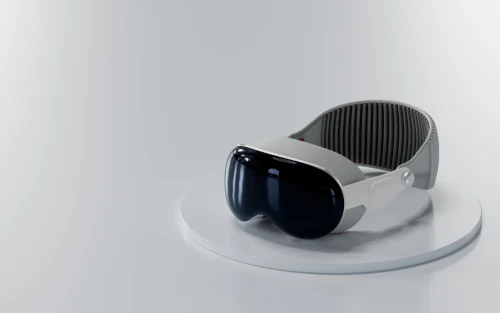
To transition to platform performance, it is the next most important dimension for ensuring device behavior. This encompasses all aspects of OS and platform services. The following recommendation references Android XR Platform Verification and OpenXR Runtime Conformance.
1. OS platform validation (Android XR) & system software
Goals:
Validate platform APIs, runtime stability, timing, and developer-facing conformity.
Key V&V activities:
- Android XR SDK and Jetpack XR: Verify Compose Glimmer (for transparent display UI), Projected (for extending mobile apps to glasses), and ARCore geospatial functions across form factors (monocular vs binocular; optical see-through vs passthrough).
- Field of view APIs: Ensure apps adapt layout/UI to measured device FOV; regression across devices, including partner glasses (e.g., XREAL Project Aura)
- Runtime stability and timing: Ensure sensor fusion threads, render threads, and compositor deadlines meet XR budgets; measure frame time jitter and FPS (90 FPS target for smoothness)
- OpenXR runtime conformance: Run OpenXR CTS across graphics backends (Vulkan/OpenGLES/Metal as applicable), interaction profiles, and blend modes
- Partner interoperability: Track conformant product lists to ensure cross-runtime parity; reduce fragmentation risk across OEMs
Exit criteria:
Android XR features validated across target hardware; OpenXR CTS passes with waivers documented; frame time/FPS meet comfort targets
2. Tracking, SLAM/VIO robustness
Goals:
Ensure world-locking stability, low drift, and resilience across real-world scenes.
Key V&V activities:
- Benchmark routes across indoor and outdoor scenes, texture-poor environments, glossy surfaces, and dynamic occlusions
- ATE/RPE computation and loop-closure precision/recall
- Robustness testing through noise, blur, and sensor-drop simulations
- Sensor desynchronization and recovery behavior
Exit criteria:
ATE/RPE within scenario budgets; loop closure stable; failure modes handled without user-visible “swimming” or drift
3. Network, Cloud XR, and streaming performance
Goals:
Ensure consistent Quality of Experience (QoE) for cloud-assisted XR experiences, including remote rendering and agentic services, by validating underlying network and system performance.
Key V&V activities:
- Wi-Fi 6/6E/7 & 5G NR emulation: Controlled RTT/jitter/packet-loss sweeps; measure end-to-end app latencies for streaming or agentic assistance. XR testbeds should cover device-cloud data-path performance per industry recommendations.
- Audio mouth-to-ear latency: Especially for distributed collaboration and AI voice; GPS-synced dual-site measurements to quantify cross-region.
- Display and motion-to-photon (MTP) latency: End-to-end measurement from sensor input or system event to visual output on the display; validate spatial and temporal alignment for XR guidance scenarios (e.g., navigation cues, AR overlays)
Exit criteria:
QoS budgets met across network scenarios; streaming remains above FPS/latency acceptability; conversational responsiveness remains usable
Applications, Functional Use Cases, UX
AI represents a distinct validation dimension, even though it manifests through experience. This is the device’s core intelligence, which actually makes it relatable to consumers. These require perfection in Core Scenarios, Performance & QoS, UX, Availability, Accessibility & Safety, etc.
1. Applications and agentic AI validation (Gemini-enabled XR)
Goals:
Validate end-user use cases and agentic flows for context-aware assistance.
Key V&V activities:
- Core flows: Navigation/wayfinding, live translation overlays, hands-free assistance with Gemini, media, productivity, and multi-window.
- Perception pipelines: Visual queries in passthrough; assess recognition accuracy, latency, and privacy controls
- Agent orchestration and guardrails: Validate data minimization, opt-in capture, and on-device vs. cloud inference splits
Exit criteria:
End-to-end task success rates, acceptable latency, privacy controls, and power budgets satisfied
2. Human factors, accessibility & safety
Goals:
Protect user health, maximize inclusion, and meet workplace safety guidance.
Key V&V activities:
- Comfort and cybersickness testing
- Accessibility aligned with XR and WCAG principles.
- Workplace safety enforcement (ISO/IEC 5927:2024)
Exit criteria:
Accessibility checklist pass; safe immersion policy adherence
3. Interoperability and ecosystem readiness
Goals:
Ensure apps and runtimes behave consistently across devices and partners.
Key V&V activities:
- OpenXR CTS
- Android XR feature parity
- Cross-app behavior consistency
Exit criteria:
Conformance maintained; APIs stable; minimal fragmentation
Where & How: Understanding the Labs for XR Device Testing
Control Rooms and Environment
- Optics/Display Metrology Bay
- Latency Lab
- Tracking/SLAM Arena
- Network Emulation & Cloud XR
- Thermal/Environmental setups
- EMC/EMI Pre Compliance
- Human factors and UX Studio
Software and Automation
- OpenXR CTS runners
- Android XR toolchain
- CTS/VTS equivalents
- SLAM evaluation stack
- Quality of Service telemetry dashboards
Potential Test KPIs (Indicative)
- Optics: MTF, uniformity
- Latency: MTP, audio latency
- SLAM/VIO: ATE, RPE
- Performance: FPS, jitter
- Thermal: device temperature
- Accessibility: WCAG alignment
- Compliance: IEC, CISPR
The Critical Path in XR Verification & Validation
- Latency chain optimization
- Optical alignment
- Tracking robustness
- Platform conformance
- Battery & thermal safety
- Human factors
- Network quality of service
ROI and Risk Mitigation
- Accelerated Time-to-Market
- Comprehensive Risk Mitigation
- Predictable Launch Readiness
- Cost Savings and Efficiency
Conclusion
XR glasses represent a fundamental shift in personal computing, where success is defined not by features, but by how naturally technology integrates into human experience.
Unlike traditional consumer devices, XR must operate within tighter boundaries of comfort, trust, and real-world usability. This makes verification and validation not just a technical requirement, but a strategic enabler of product success.
As XR ecosystems continue to evolve, the focus must move beyond validating individual components to ensuring consistent, system-level experience across diverse real-world conditions. This requires a more holistic approach, one that brings together hardware, platforms, AI, networks, and human factors into a unified validation strategy.
For device makers and platform leaders, this is no longer optional. Rigorous, human-centric V&V will be critical to accelerating adoption, building user trust, and delivering XR experiences that scale with confidence.